
From easily accessible downtown parks to large parks perfect for a leisurely weekend, here are our top picks for fall foliage spots in Tokyo and their typical peak viewing times.
Koishikawa Korakuen
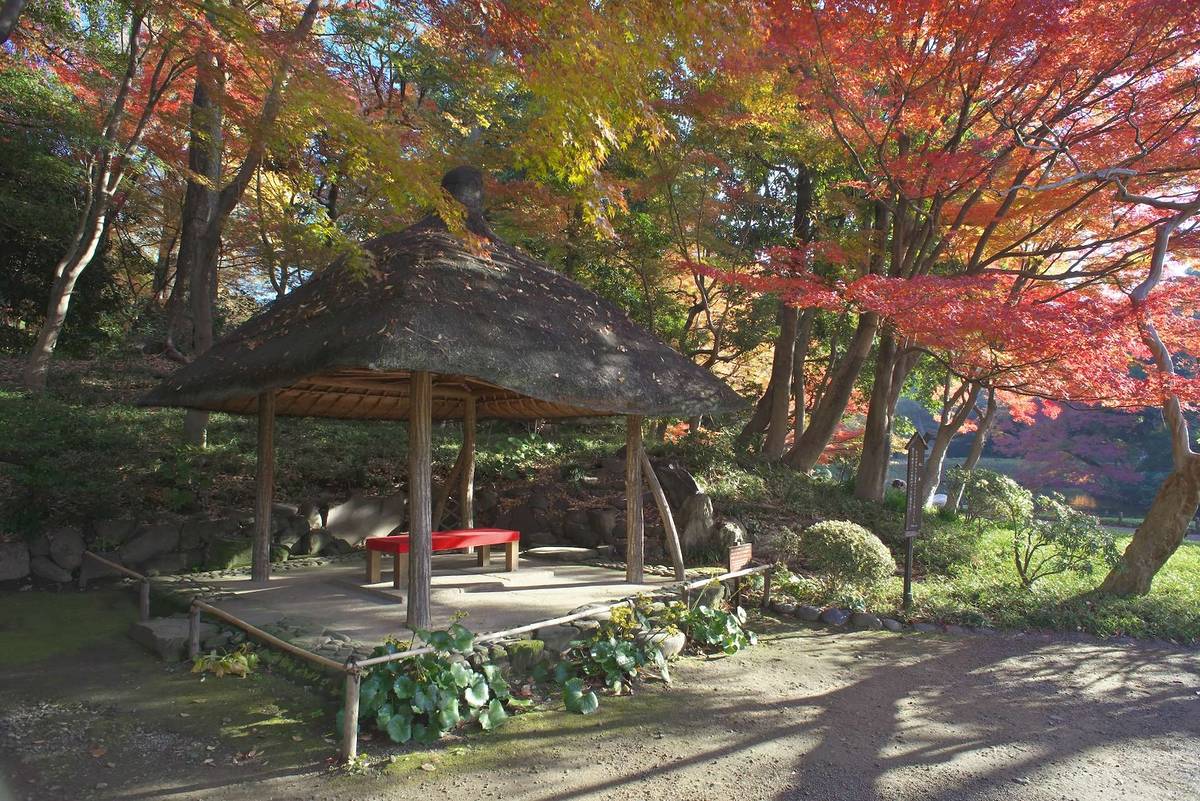
The fall foliage begins with the Japanese maple trees on Horai Island floating in the Oizumi Pond. During the peak viewing period, the “Autumn Foliage Grove” beside the pond reflects beautifully on the water’s surface, and the foliage around “Maruya” creates a stunning scene as it blankets the sky. Toward the end of the season, the area around the vermilion-painted “Tsuuten Bridge” is a highlight. The typical peak viewing period is from late November to early December.
Showa Memorial Park
The two ginkgo tree-lined avenues within the park—the “Katari Ginkgo Avenue” (98 trees, 300 m) and the “Canal-Side Avenue” at the Tachikawa Gate (106 trees, 200 m)—are popular spots that transform into golden tunnels during the fall foliage season. Since 2023, the golden leaves have been illuminated at night, so please check the official website for this year’s schedule. The typical peak viewing period is from early November to late November.
Shinjuku Gyoen
The ginkgo trees in front of the greenhouse are a popular photo spot every fall. Three massive trees—each about 30 meters tall with a trunk circumference of approximately 4 meters—turn beautiful colors, and stepping beneath them reveals a world of golden hues. Also , don’t miss the sight of delicate, glowing orange leaves gently draping over the powerful , sinuous trunks of the Tamukeyama trees near the central pond and the circular flowerbed.
Mount Takao
Following its three-star rating in the 2007 Michelin Travel Guide, the number of hikers has increased, with annual visitor counts estimated at between 2.6 million and 3 million. During the fall foliage season, the park attracts large numbers of tourists and hikers, making it the busiest time of the year; therefore, it’s recommended to visit on days other than weekends and holidays. The peak viewing period is typically from mid-November to early December.
Todoroki Fudōson
A temple located within Todoroki Gorge, where the Fudo Waterfall cascades down. Believed to grant blessings such as the fulfillment of wishes and traffic safety, it is a “power spot” where flowers bloom throughout the seasons—offering cherry blossoms in spring and autumn foliage in fall. The peak viewing period is typically from late November to mid-December.
Tokyo Metropolitan Art Museum of Gardens
During the fall foliage season, vibrantly colored maple and ginkgo trees adorn the garden, and nighttime illuminations are held.The museum’s architecture and the autumn foliage floating against the night sky create a truly special atmosphere. The peak viewing period is typically from late November to early December. Why not also enjoy the exhibition “Eternal Moments: Van Cleef & Arpels—Art Deco as Told Through High Jewelry,” which runs from Saturday, September 27, through Sunday, January 18, 2026?
Hamarikyu Gardens
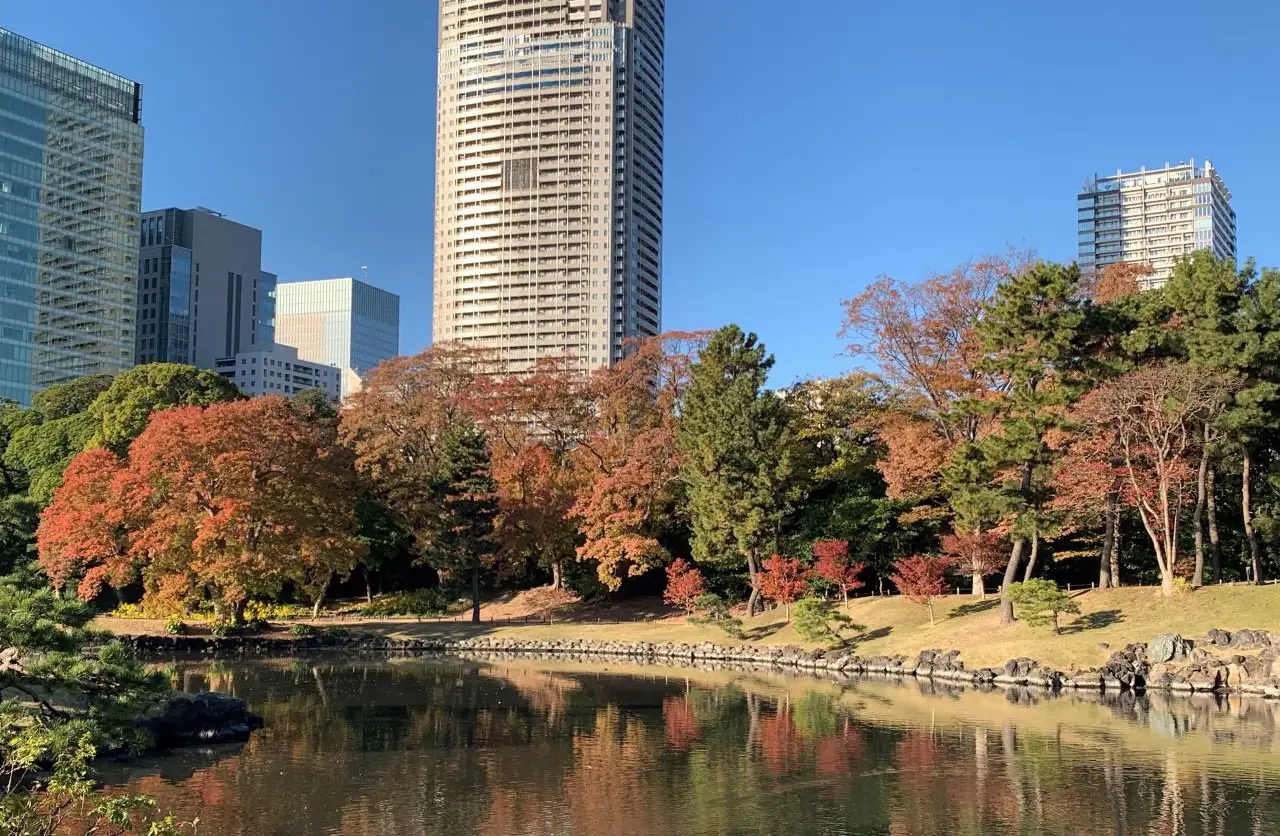
Located in Chuo Ward, Hamarikyu Gardens was originally the garden of the Tokugawa shogunate. The highlight is the interplay between the colorful autumn scenery—featuring Japanese maples and other trees around the Tsunagi Pond —and the reconstructed and restored tea houses. The peak viewing period is typically from late November to early December.
Hibiya Park
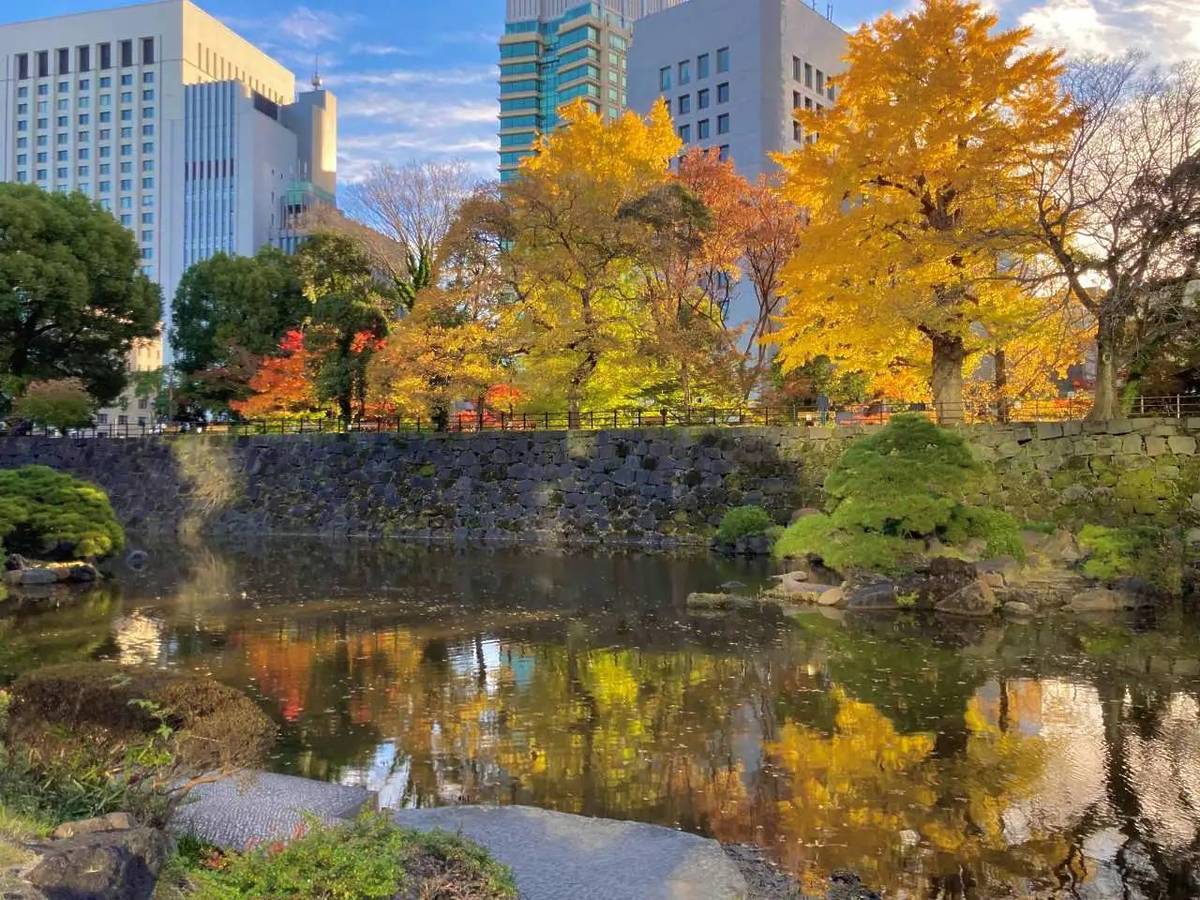
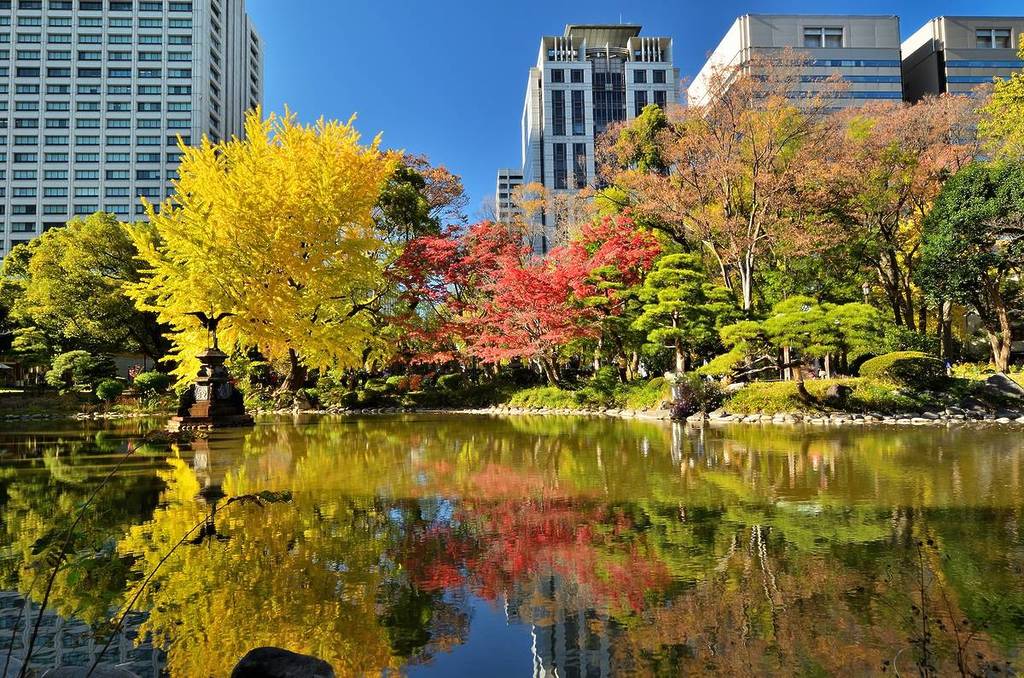
Japan’s first “Western-style” park, which skillfully weaves traditional Japanese elements into its design while incorporating Western culture. The ginkgo-lined paths leading along the S-shaped garden path—whose design has remained unchanged since the Meiji era — and the autumn foliage around the Kumogata Pond, featuring the Crane Fountain, are particularly beautiful. The peak viewing period is typically from late November to early December.
Meiji Jingu Gaien Ginkgo Avenue
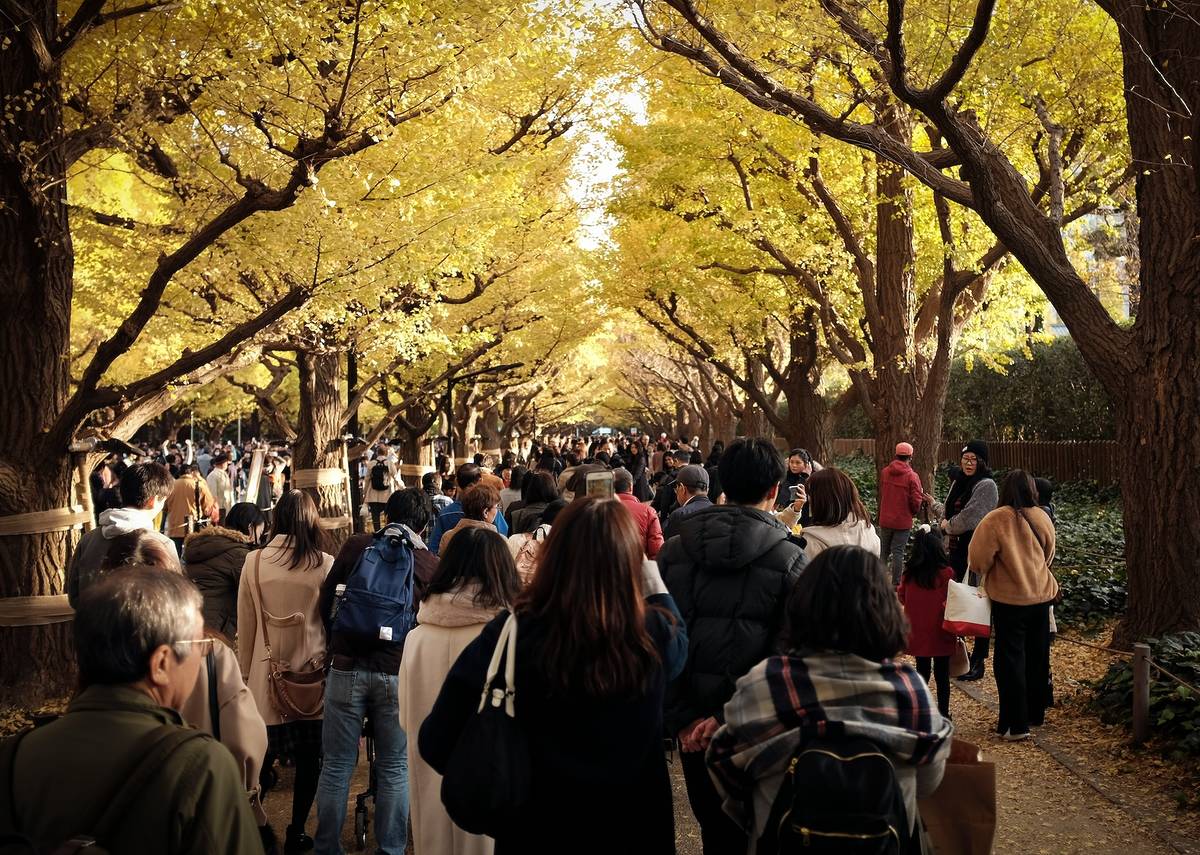
One of Tokyo’s most iconic spots for autumn foliage. Along a stretch of approximately 300 meters, 146 ginkgo trees are planted at intervals of roughly 9 meters, creating a unique landscape that feels like walking through a tunnel of yellow. This landscape was designed by Dr. Yoshinobu Orishita, known as the “master of modern Japanese landscape architecture.” The ginkgo trees were planted based on perspective, with the heights of the trees and the gentle slope of the path leading toward the Art Gallery carefully calculated.The best time to view the trees is typically from late November to early December.
Rikugien
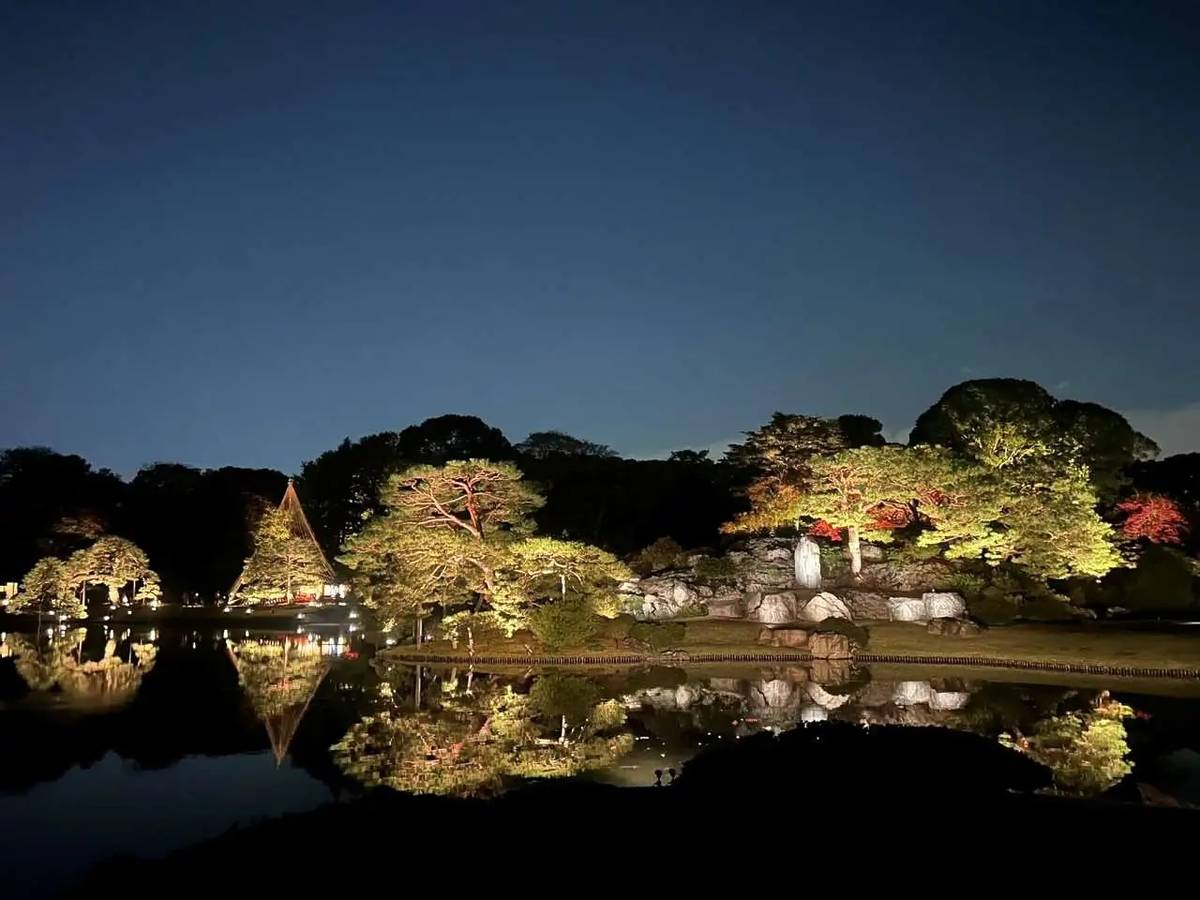
The “Rikugien Garden Autumn Foliage: Special Nighttime Viewing,” which features the garden illuminated at night—when it is normally closed to the public—and projection mapping onto the walls of the traditional storehouse, will be held from Wednesday, November 25, to Sunday, December 6. The garden will close once at 5:00 PM and reopen from 6:00 PM to 8:30 PM (last admission at 7:30 PM).A special ticket is required for the Nighttime Special Viewing (advance tickets are 1,000 yen online; same-day tickets are 1,200 yen online or at the ticket window; free for elementary school students and younger).