
If you’re traveling with young children, we recommend spots where you can interact with horses and small animals; for dates or outings with friends, galleries—which are free—are a great choice!
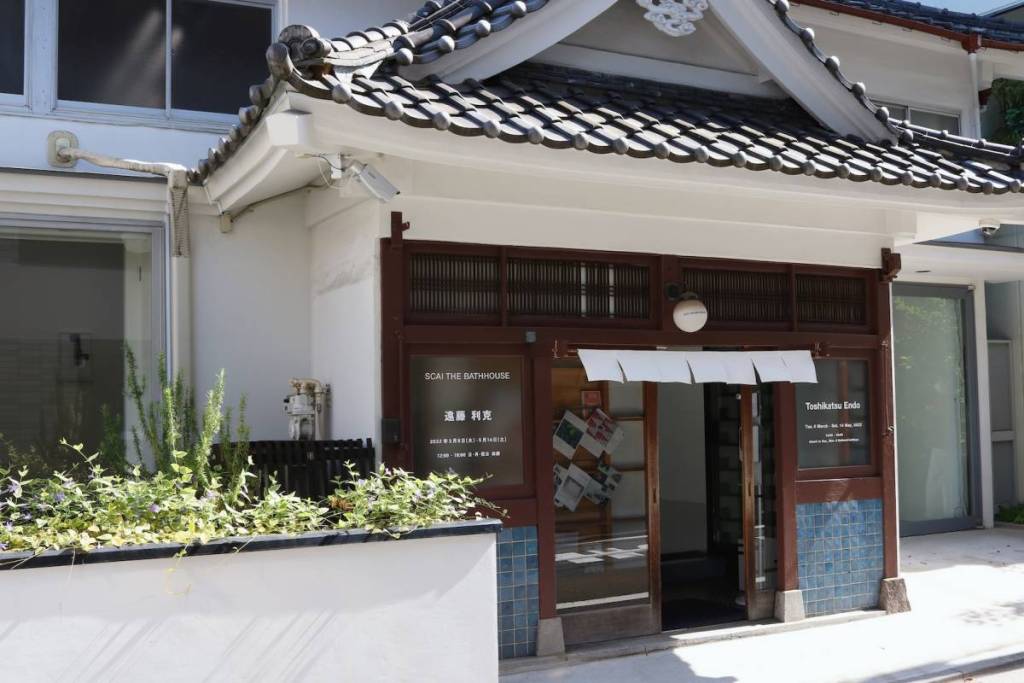
Located in Yanaka, Taito Ward—an area of Tokyo that retains its old-fashioned streetscape—this gallery space specializes in contemporary art and was renovated from “Kashiwa-yu,” a historic public bathhouse with 200 years of history. While solidifying the reputations of many leading artists such as Lee Ufan, Toshikatsu Endo, and Mariko Mori, it also showcases the work of next-generation artists like Kohei Nawa and Reijiro Wada to the world.
Of the seven traditional Japanese boats owned by Koto Ward, six are located at Yokojikkengawa Waterfront Park. Thanks to the cooperation of the “Traditional Japanese Boat Friends Association , ” you can board these boats and try your hand at rowing for free. The experience lasts about 20 minutes. On operating days, check in at the seaside boarding area between 10:00 a.m. and 2:15 p.m., and you’ll be boarded in order.Yokojikkengawa Waterside Park also features a boat rental facility and water-based obstacle courses.
This is the only park in the ward where you can fish, and crucian carp are the main catch. While fishing gear is not available for rent, anyone can easily enjoy fishing as long as they handle the fish carefully using a net or similar tool and return them to the pond immediately. Operating hours are from 6:00 a.m. to 6:00 p.m. from April through September, and from 7:00 a.m. to 5:00 p.m. from October through March.
The JRA Equestrian Park, which had been closed in conjunction with the equestrian events of the Tokyo 2020 Olympic and Paralympic Games, reopened in November 2023 after renovations. It hosts JRA horse shows and, particularly on event days, offers horse therapy activities geared toward children and people who have never ridden a horse before. There’s also a kids’ corner and a diaper-changing and nursing room—a welcome feature for families with young children.
A free zoo located a 15-minute walk from Nishi-Kasai Station. In the petting area, you can interact with rabbits, guinea pigs, and Coelacanth ducks under a strict rotation system. The petting area is open only on weekdays, four times a day: starting at 10:30 a.m., 11:00 a.m., 1:30 p.m., and 2:00 p.m.
This park is designed for children in middle school and younger, offering the chance to interact with ponies and small animals. From 10:00 a.m. to 11:30 a.m. and from 1:30 p.m. to 3:00 p.m., children can pet and hold small animals such as guinea pigs, rabbits, and dogs. Additionally, children in middle school and younger can enjoy a pony-riding experience for 200 yen per person per ride, riding a pony along a roughly 150-meter round-trip course within the park.
A research institute serving as a hub for astronomical research in Japan. It hosts events for the general public that allow people to experience the wonders of astronomy even in the city. Why not try attending one of the stargazing sessions held twice a month, or enjoy 3D movie content at the 4D2U Dome Theater, which features immersive, full-dome 3D imagery projected onto a 10-meter-diameter dome screen?
A spot where you can learn about aviation careers and JAL’s history, and see real aircraft up close. In the museum, you can freely explore various exhibits, including displays on the work of the staff who support flights and JAL’s historical artifacts. Inside the hangar, tours are available under the guidance of staff members.
In addition to introducing the various ANA Group companies that make up the maintenance division—which supports the ANA Group’s safe operations— the facility offers hands-on simulations of maintenance work. In the hangar, visitors can appreciate its sheer size from the third-floor deck, while on the first floor, they can get an up-close look at actual airplanes and watch maintenance technicians at work.
Opened in 1919, this is the oldest surviving art gallery in Japan. With ceilings over 5 meters high, the space feels more like an art museum than a typical gallery. It has hosted over 3,100 exhibitions to date. Since the 1990s, it has focused primarily on contemporary art, showcasing works that combine avant-garde innovation with artistic purity.